Electrical Engineer
Engineering Career
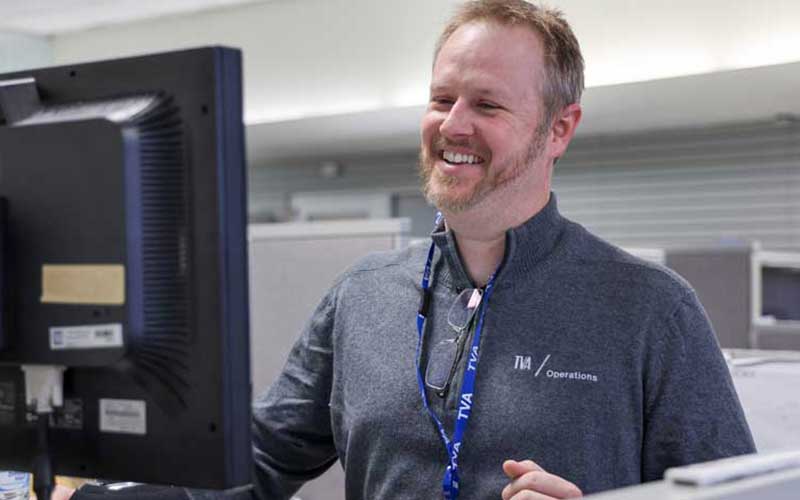
As a kid, Timothy Fritch loved playing with a simple electrical lab kit. He learned quickly that manipulating wires would create different effects.
Hook a wire here and a light bulb flickers.
Hook another wire there and a fan kicks on.
“I’ve always enjoyed understanding how things work together,” Fritch said.
That early interest in machines led him to a career in electrical engineering.
Fritch started at TVA as an intern, while he was studying engineering in college.
“I learned a lot as an intern in that group,” he said. “When I saw the kind of work they were doing and got that exposure to TVA’s focus on increasing and maintaining reliability, I knew this was the right field for me.”
A Day in the Life
Today, Fritch leads a team that plans and studies power outages. They run tests and create plants to prevent problems on the transmission system before they happen.
In three years, they found 250 improvements that saved $6 million in labor and other costs.
But more importantly, they helped protect the electrical power grid during extreme cold. They began planning months before the storm even showed up in the forecast.
“My team, along with the transmission operators, looked at every different scenario of what could happen on the transmission grid and how to address it,” Fritch said.
Becoming an Engineer
Becoming an engineer requires a college degree in engineering. You’ll study math, engineering and design. You’ll develop skills in problem solving, critical thinking and reading comprehension.
TVA offers an internship program for college students. These paid opportunities can last a semester or longer. Interns work with TVA’s employees on critical projects across the region.
TVA hires many different types of engineers, including:
- Electrical engineering
- Civil engineering
- Nuclear engineering
- Mechanical engineering
- Environmental engineering
Starting pay for an engineer is about $75,000 a year.