Heavy Equipment Operator
Craft Career
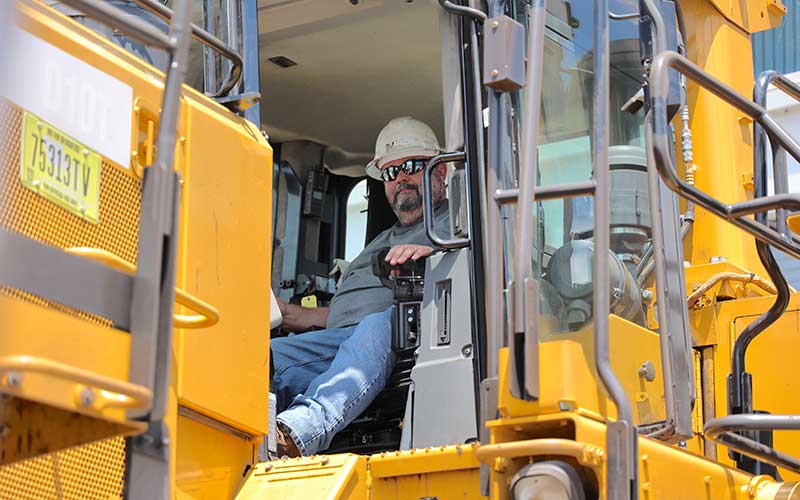
Jeff Dalton begins his 10-hour work shift at 6 a.m.
He’s a heavy equipment operator and coal yard foreman at TVA’s Kingston Fossil Plant. He and his crew of seven operators move tons of coal to help fuel the Valley region.
Even after 30 years, sitting inside the cabin of his Caterpillar D10 bulldozer still feels like being on top of the world.
“This has always been my dream job, ever since I was a kid,” he said.
A Day in the Life
Dalton and his team start their day by carefully inspecting their equipment. The massive 77-ton bulldozer have massive blades about 8 feet tall and 22 feet wide.
They check fuel levels, hydraulics and other systems to make sure the equipment is safe and reliable.
The use the bulldozers and a traveling conveyor system the call “the plow” to blend coal from two large stockpiles. The blended coal ensures the power plant burns the coal efficiently.
Modern technology makes operating heavy machinery less physically demanding than it used to be. But it still requires sharp focus.
“You can’t see a whole lot when you’re sitting behind the blade,” Dalton said. “you have to stay alert, constantly watching and constantly adjusting.”
Dalton’s team also operates cranes, locomotives, backhoes, loaders and excavators.
“Anything TVA has, my guys can operate,” he said.
Becoming a Heavy Equipment Operator
Dalton grew up around heavy equipment.
“My grandfather used to log, and I would go to the woods with him and operate his dozers,” he said. “I’ve loved it ever since.”
After serving in the U.S. Navy, Dalton worked in road construction. He then joined the International Union of Operating Engineers. In 2005, he was assigned to Kingston for what was supposed to be a two-week job. It’s turned into a 21-year career.
Many heavy equipment operators begin their careers with on-the-job training, but there are also apprenticeships and training programs available. Many heavy equipment operators seek out specialized certifications related to safety, specific equipment or working with hazardous materials.
Dalton encourages people to enter the trade: heavy equipment operating offers stability, strong wages and essential work, he said.
“Any construction project is going to start with a groundbreaking,” Dalton said. “There is always going to be a need for operators.”