Lesson: The Tennessee Valley and the War Effort
What do Fontana Dam, Oak Ridge and the Tennessee Valley Authority have in common? Each one played a key role in helping the United States win World War II. How? Explore this section’s photos, videos, maps and more to find out.
Lesson 2: The Tennessee Valley and the War Effort - Oak Ridge, Fontana and the TVA
Introductory Activity
- Show the The Tennessee Valley and the War Effort (22-minute) video.
- Use the following questions to lead the class in a follow-up discussion:
- Why was Oak Ridge, Tennessee, established?
- In what part of Tennessee is Oak Ridge located? Why was it not originally marked on any map? Why was this location chosen?
- What role did Oak Ridge play in the United States’ World War II effort?
- Why was the work being conducted at Oak Ridge kept so secret?
- What consequences did the work conducted at Oak Ridge have upon the rest of the world?
- How did the secrecy of the work at Oak Ridge affect the people who lived there?
- What role did Fontana Dam play in the war effort?
- Why did Roosevelt ask TVA to build this particular dam?
- How many workers did it take to build the Fontana Dam?
- Today, it would take 10 years to build a dam like Fontana. How long did it take back then?
- What is so special about the materials used to build Fontana and why? How are these materials different from the steel and concrete typically used? Explain.
Discovery Activity
Note: This class can be conducted with each student using an individual computer, tablet or mobile device. Or, the teacher can lead the class through the lesson using the website, handouts and a projector/whiteboard.
- Distribute a handout to each student. Students will write answers on notebook paper. Click here to print the handout.
- Direct students to the website.
- Ask students to use the tools and resources provided by the website to respond to the handout questions (for a 100-point grade).
- As the students complete the activity, be available to answer any questions they might have.

Extension Activities
Digging Deeper
Assign students one of the Extension Activities for this lesson, or provide a list of all Extension Activities and let students work in groups to decide which one they would like to complete. Answers will vary based on student interest and the amount of research they conduct.
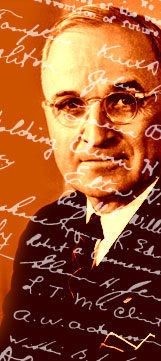
View the "The Oak Ridge Petition".Think about the impact this document had upon the decision to drop nuclear weapons. Now imagine you had the opportunity to sign the petition. Would you have chosen to sign it? Write a short essay explaining why you did or did not sign it.
For Teachers:
Watch the Oak Ridge video and read the Oak Ridge Petition of 1945 with your classroom. Afterward, discuss why scientists at Oak Ridge had concerns over the development of the atomic bomb and their decision to draft the Oak Ridge Petition.
- Why did scientists feel the petition was necessary?
- Why did the scientists suggest warning the Japanese prior to dropping the atomic bomb? And why did President Truman decide not to do so?
After discussing the Oak Ridge Petition with your class, divide your class into two groups, the groups can be randomly assigned or based on your students' true feelings on the topic. Let the students research and debate the two sides to determine if they would have signed the Oak Ridge Petition of 1945.
For Students:
In 1945, U.S. scientists completed development of the atomic bomb to help end World War II. After all, if you have a bomb with the capability to create mass destruction, you hold a big advantage over another country. But the existence of the bomb also created important moral and ethical issues.
- Exactly how much damage could the bomb do?
- Would a bomb like this help create a future in which all countries could eventually destroy one another?
- Would the bomb make the world more stable or less stable?
Scientist Leo Szilard and 69 others at the Manhattan Project in Chicago – where much of the atomic bomb development took place – created a petition asking President Truman to further consider the consequences of the bomb before dropping it on Japan. But before sending it to the President, he sent it to scientists at the Manhattan Project laboratory at Oak Ridge, Tennessee, for their review.
After discussions, the Oak Ridge scientists produced another petition calling for the atomic bomb to be "adequately described and demonstrated" before use, and asking that the President warn the people of Japan that the U.S. would drop it if Japan didn't surrender. This petition included 67 signatures.
Imagine you are a teenager whose family is getting ready to move to Oak Ridge, a community you have heard very little about. Watch the Life in Oak Ridge video. Think about what your experiences might be like after you move. What would you tell your friends about your future home? What do you think life will be like in Oak Ridge?
Imagine you are employed at Oak Ridge during WWII. You have just discovered that your work is helping to create the atomic bomb, but that the work you are doing will also contribute towards advancements in electric power and medicine. Now you must decide whether or not to continue working on the project. Your class will be divided into two groups for a debate. One group will support the project, and the other group will oppose the project. On the website, watch the Oak Ridge video and review the links under the "Nuclear Power Debate" section. Create a list of arguments that support your position.
For Teachers:
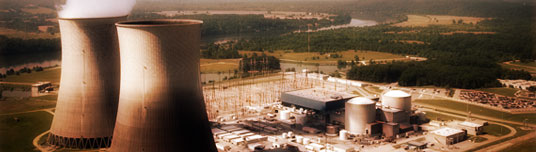
Concerns over the use of nuclear power are nothing new. Scientists at Oak Ridge knew the work they were doing was helping to create the atomic bomb. But their work also led to significant advancements and achievements in electric power and medicine.
Discuss the issue with your class to give them a clear understanding of the pros and cons of the development of nuclear power. Divide the class into two groups. The groups can be randomly assigned or based on your students' true feelings. Let the students research and debate the pros and cons of nuclear power.
For Students:
Nuclear power is energy produced from non-explosive nuclear reactions. Some people support it, and others oppose it. Why? There are many answers. Search the links in the resources below to discover the facts and opinions of both sides.
The building of Fontana Dam was a critical contribution to America's World War II effort. Pretend you are a news reporter assigned to cover the progress of Fontana. Watch the Fontana Dam video then use the website to research additional information and photos. Write a news article announcing the completion of the dam, highlighting its features and explaining its significance to the war effort. Use the website template and photo archive to create your story.
For Teachers:
After watching the "Fontana Dam" video with your class, discuss how the dam was a critical contribution to America's World War II effort. Let your students tap into their inner-journalist by crafting their own newspaper article about Fontana Dam's impact on World War II.
By using our online newspaper template, your class can create customized articles complete with historic photos and unique headlines.
For Students:
Here's another chance for you to get creative. Pretend you're a news reporter in the 1940s gathering facts about the completion of Fontana Dam, its features and its significance in the war effort. Then write a newspaper article about it.
For your story's details, use the information and videos from this website. You can include quotes from the online interviews in the video section Valley Stories: Reflections from the Past.
Write the date, headline, subhead and the main article in the fields. You can insert photos from the photo archive and drop them into your story. Just look for the "Large Image" or "Small Image" sections and click on the "Select" button to start browsing. Click "Submit" to preview the final product.
Mini Lessons
If you want to teach about Oak Ridge and Douglas Dam:
Watch the Oak Ridge clip and lead students into discussion based on the following questions:
- Why was Oak Ridge the ideal location for a nuclear research laboratory during WWII?
- How did the propaganda and war-time mindset of America lend to the maintenance of the secret of Oak Ridge?
- How did Douglas Dam fuel the war effort?
If you want to teach about President Franklin D. Roosevelt, President Harry S. Truman, the Manhattan Project and atomic bombs:
- Using the Oak Ridge Petition of 1945 and the Oak Ridge Petition resource from Lesson 2: Resources on the website, have students discuss the decision made by the scientists to write this petition. Have students address questions such as:
- Why did the scientists feel the petition was necessary?
- Why did the scientists suggest a warning to the Japanese prior to releasing the bomb, and why do you think President Truman did not do so?
- Once students have discussed the Oak Ridge Petition, have them decide whether they would or would not sign the petition and why. Have students split into two groups in the room: those who would sign the petition and those who would not. As a class, have the two groups debate their decisions.
If you want to teach about Fontana Dam and World War II and Wartime propaganda:
- Show students the Fontana Dam clip, found in the Extension Activities Resources for The Tennessee Valley and the War Effort.
- Also, have students read Fontana Dam History from Lesson 2 Resources prior to viewing the clip.
- After viewing the clip, have students write a one-paragraph essay, choosing one of the following questions:
- Why did the people building Fontana Dam feel that their work was a way of contributing to the war effort during WWII?
- What was the key resource in building Fontana Dam? Explain. Have students discuss their responses.
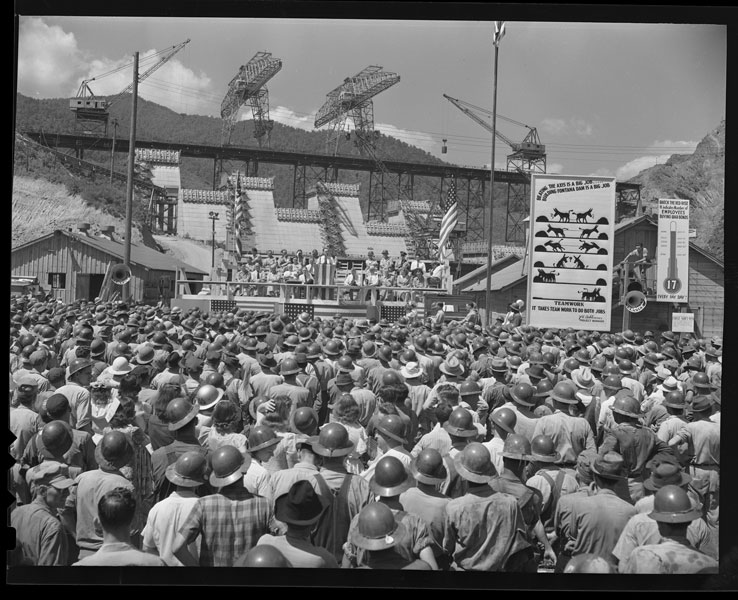
- Another option using this clip: Pause the video during the showing of the three propaganda posters. Have students choose one and think about the following questions:
- How did this propaganda poster/billboard fuel the war effort?
- How did this propaganda poster/billboard encourage TVA workers? As a class, have students group according to their choice of poster/billboard and discuss with their peers their answers. Then, break the class up with a representative from each poster/billboard to discuss each of their answers.
If you want to teach about women in the workforce and armed forces during World War II:
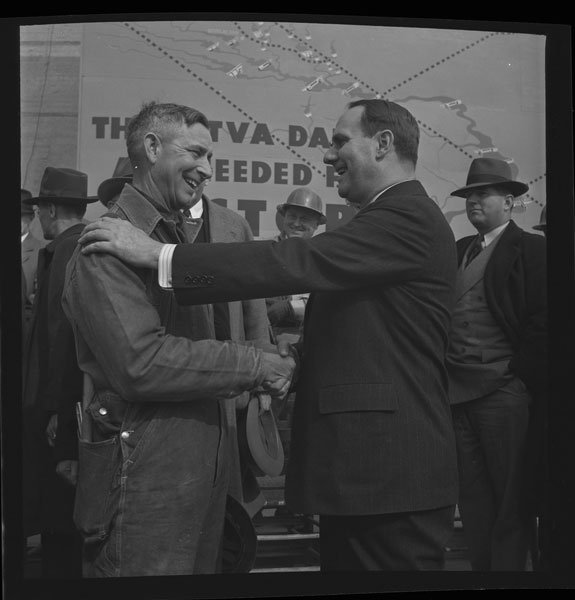
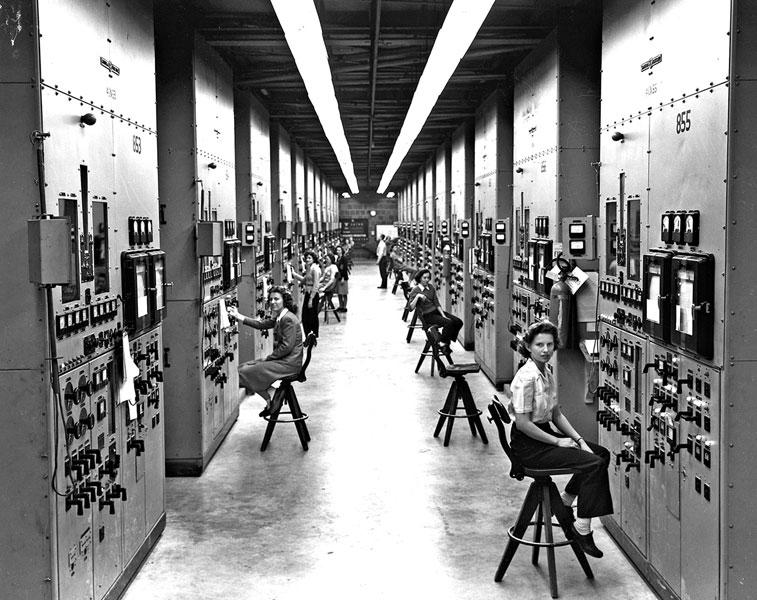
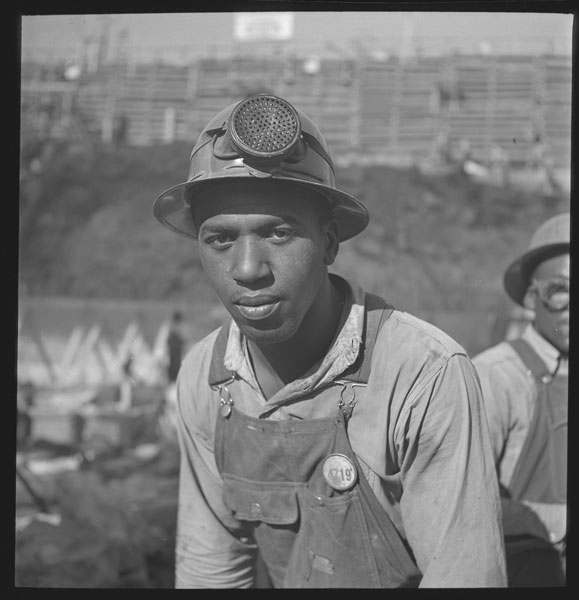
Using the Photo Resource: WWII and the TVA. Show students all of the provided pictures.
- Use these pictures to discuss the role of women during the war on the home front.
- Ask specifically about the "Rosie the Riveter" Poster and what this character represents to American women.
Lesson 2: The Tennessee Valley and the War Effort - Photos
Lesson 2: Videos
TVA and the Impact on the Tennessee Valley. Valley Stories: Reflections from the Past.
Graphs
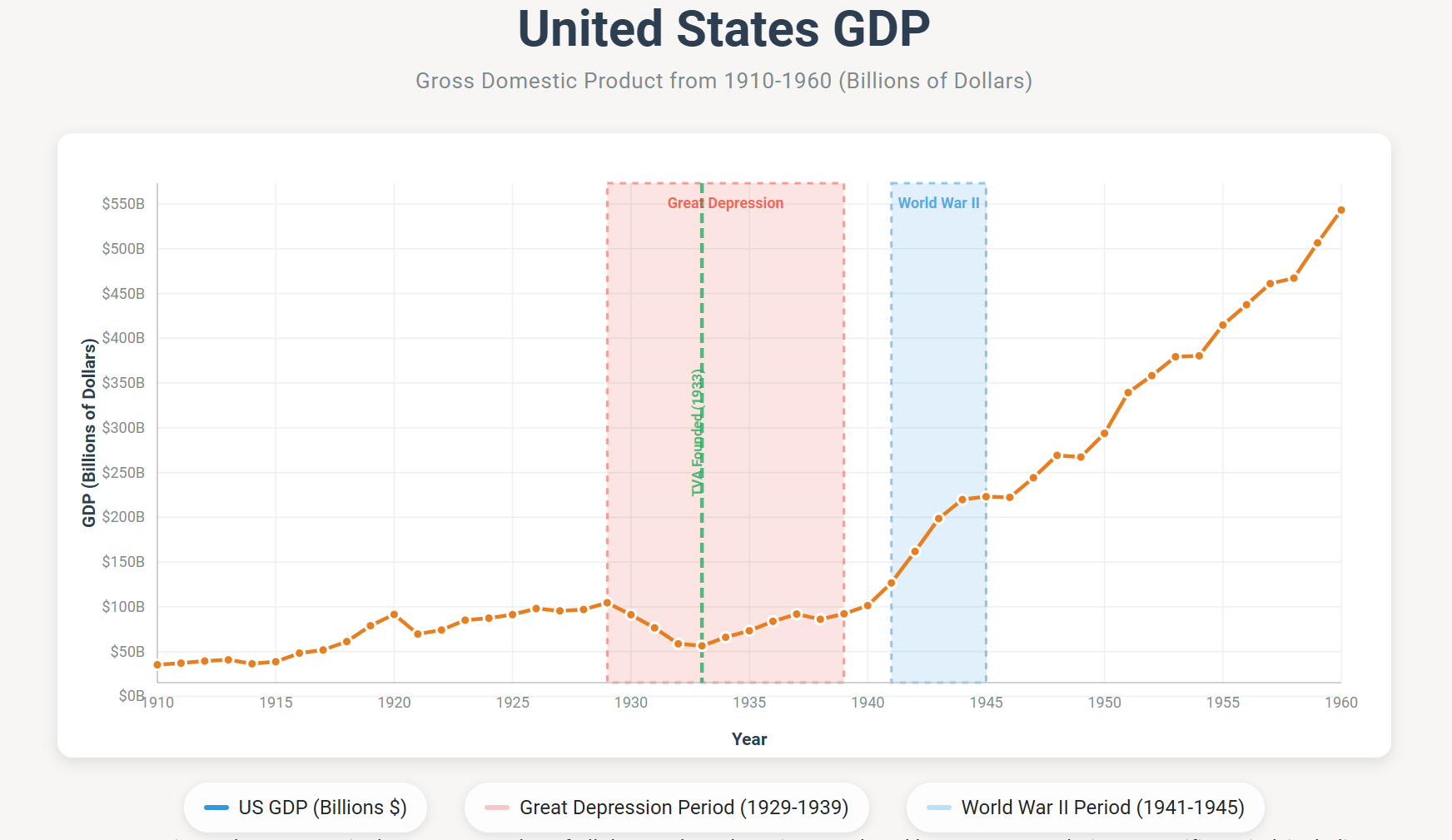
United States GDP
Gross Domestic Product from 1910-1960 (Billions of Dollars)
Gross Domestic Product, or GDP, is the monetary value of all the goods and services produced by an economy during a specific period, including consumption, government purchases, investments, and exports minus imports. In the graph above, you can see how our GDP stalled during the Great Depression of the 1930s, then quickly increased by the end of the decade, and continued to grow at a steadier pace up to 1960.
United States Unemployment Rate
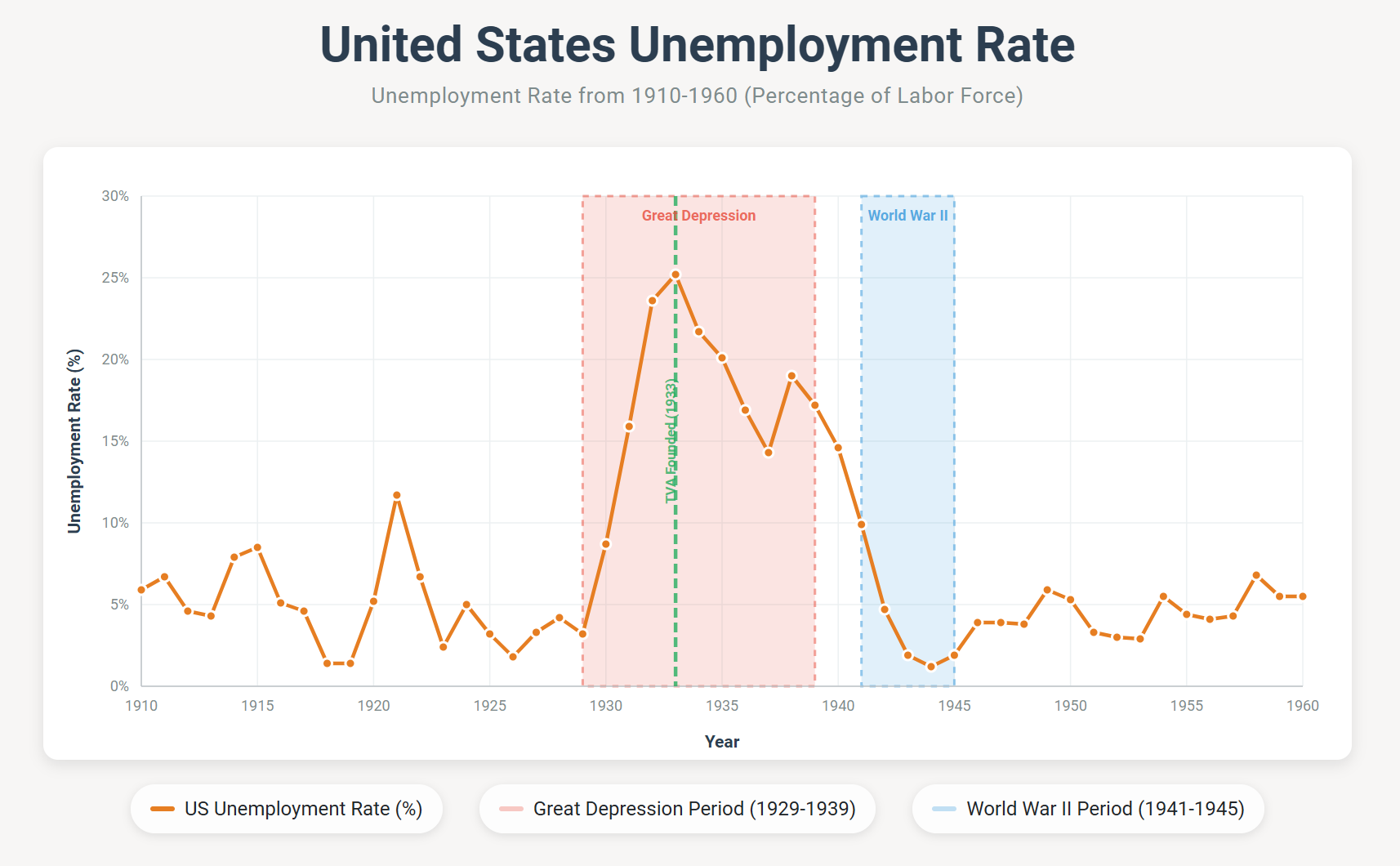
Unemployment Rate from 1910-1960 (Percentage of Labor Force)
What trend do you see occurring from 1929-1939? What events do you think contributed to these changes in the unemployment rate?
Power Generation Map
Click the legend for a list of points of interest, or an icon for more information about that location.
Oak Ridge Map
Click the legend for a list of points of interest, or an icon for more information about that location.