'%3E%3Cmask id='b' fill='%23fff'%3E%3Cuse xlink:href='%23a'/%3E%3C/mask%3E%3Cuse fill='%23414141' xlink:href='%23a'/%3E%3Cg mask='url(%23b)' fill='%23414141'%3E%3Cpath d='M-160-170h300v300h-300z'/%3E%3C/g%3E%3C/g%3E%3C/g%3E%3C/svg%3E)
Wilson
Wilson Dam on the Tennessee River in northwest Alabama is TVA’s largest hydroelectric facility. The dam was initially built to help power the World War I effort, but it gained a new purpose when TVA acquired it in 1933.
Celebrating a Century
Photo Gallery - Click on a photo to view a full-size version and launch the slideshow.
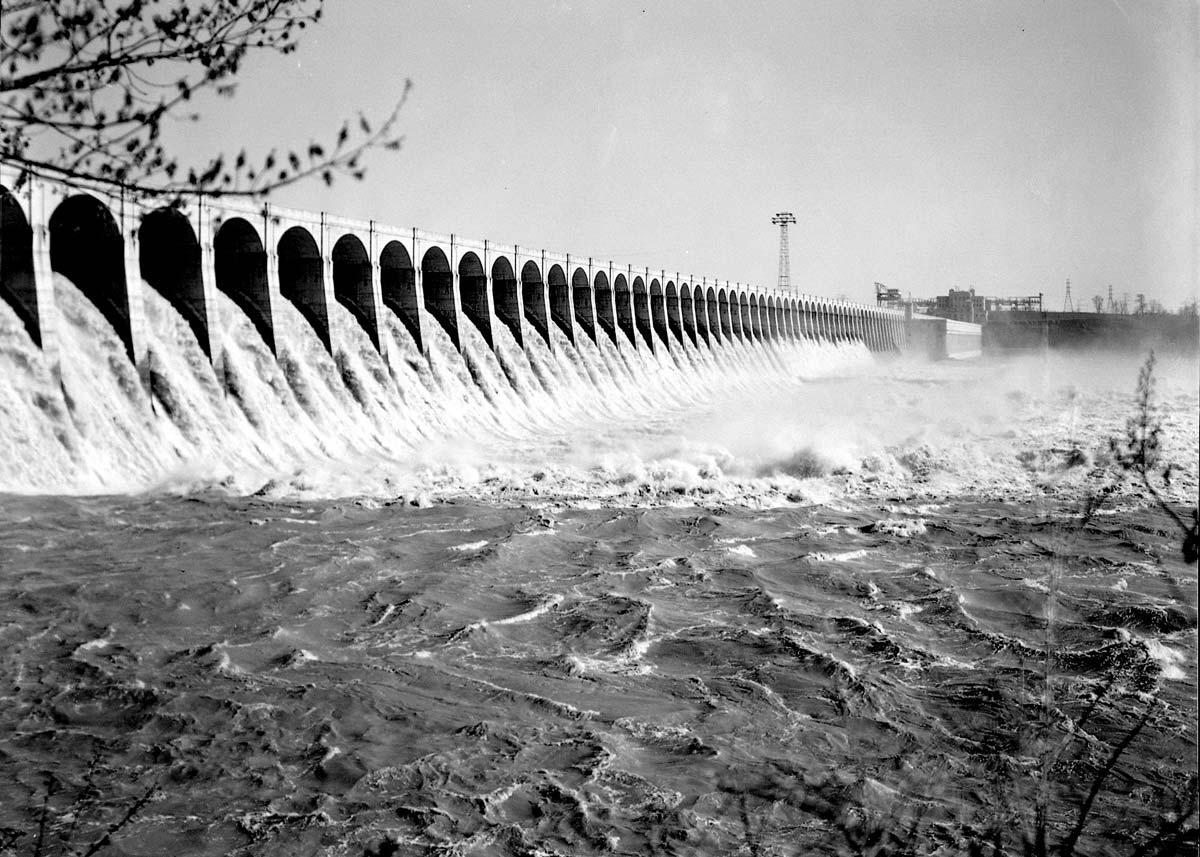
Nearly 18,000 workers began construction on Wilson Dam in 1918, with the dam completed in 1925.
Now 100 years later, Wilson Dam – a National Historic Landmark – is still providing a critical mission – producing 663 megawatts that power more than 380,000 homes and businesses, as well as providing flood control, navigation, water supply and recreation.
Discover more about a new generation for a time-honored hydroelectric plant.
Reservoir
Visitors to Wilson Dam Reservoir enjoy camping, boating and fishing. The reservoir is known as the Smallmouth Capital of the World for the trophy smallmouth bass caught there.
The dam reservation site features a network of hiking and walking paths, including Old First Quarters Small Wild Area, named after a complex that housed engineers during Wilson’s construction. Small feeder creeks run through the natural area, forming an ideal habitat for a variety of ferns, including the walking fern, a rarity in Alabama.
Wilson, Pickwick and Wheeler reservoirs cover the treacherous Muscle Shoals, which once blocked navigation on the Tennessee River.
Visitor Center
Display panels near the power plant describe the struggle between private and public power interests for ownership of the Shoals facilities, which TVA acquired when it was created in 1933. Get hours, directions and more information for the visitor center.
Wilson: Facts & Figures
- Construction of Wilson Dam began in 1918 and was completed in 1925.
- The dam is 137 feet high and stretches 4,541 feet across the Tennessee River.
- Wilson Dam is a hydroelectric facility. It has 21 generating units with a summer net dependable capacity of 663 megawatts. Net dependable capacity is the amount of power a dam can produce on an average day minus the electricity used by the dam itself.
- Wilson is the largest conventional hydroelectric facility in the TVA system. Only the Raccoon Mountain Pumped Storage Plant near Chattanooga can generate more hydroelectric power.
- Wilson Reservoir provides 166 miles of shoreline and 15,500 acres of water surface for recreation.
- The main lock at Wilson is 110 feet by 600 feet. With a maximum lift of 100 feet, it is the highest single-lift lock east of the Rockies. An auxiliary lock has two 60-by-300-foot chambers.
- On average, 3,700 vessels pass through Wilson's locks each year.
- Wilson has a flood-storage capacity of 50,500 acre-feet.
More Information on Wilson Reservoir
Explore Wilson Dam through a video tour
Celebrate TVA Dams

The Unified Development of the Tennessee River plan stressed TVA was to provide flood control, navigation and electricity for the region. TVA’s dams are tangible evidence of its primary mission: improving life in the Tennessee Valley. We’re celebrating the plan with an in-depth look at 32 of the dams it comprises.
A Dam for the People
Wilson Dam was built for WWI, but the war ended before it could spin up its turbines. After years spent in limbo, the dam gained new purpose with the founding of TVA. Read more about the history of Wilson Dam.